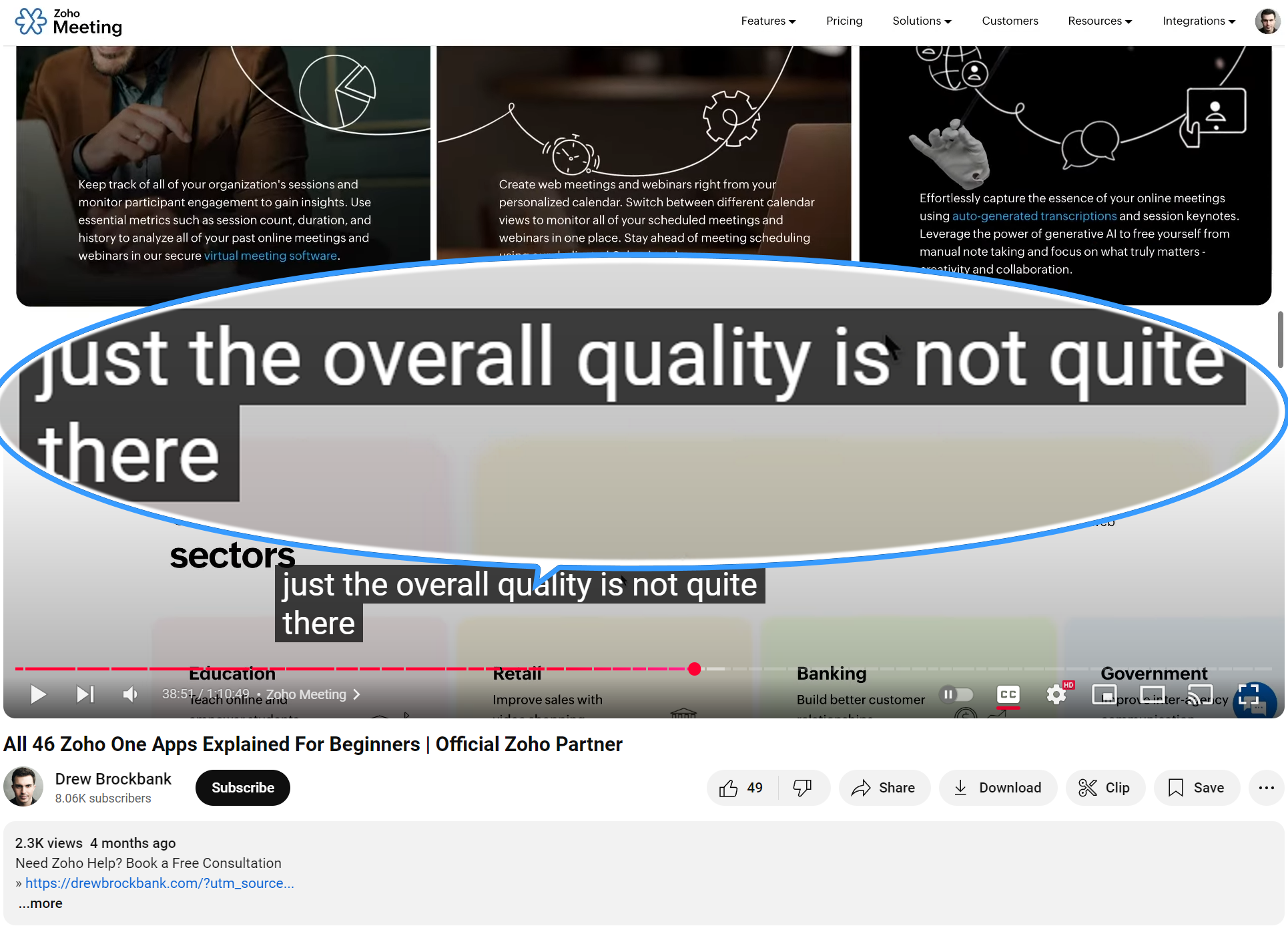
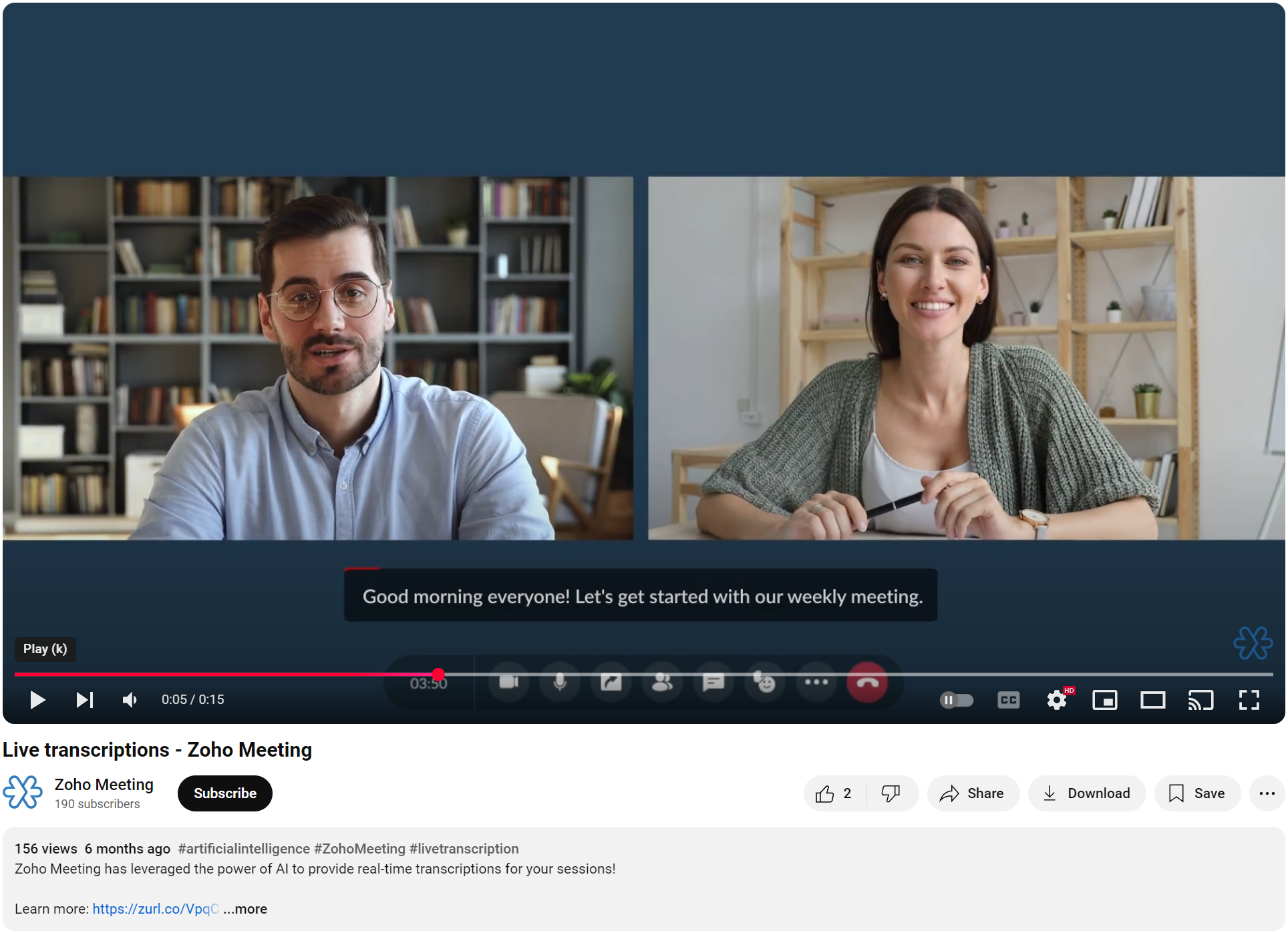
The Zoho Meeting Video Quality Crisis
I'm evaluating Zoho One for my business in Switzerland, and I must address a critical concern that threatens our potential adoption of the platform—the persistently poor performance of Zoho Meeting's video conferencing capabilities. In today's digital-first workplace, video conferencing isn't just another feature; it's the cornerstone of modern business communication, as essential as email for connecting with clients, conducting training sessions, and maintaining team cohesion across locations.
While Zoho One offers an impressive suite of integrated business tools, the video quality of Zoho Meeting remains significantly below the standards set by platforms like Zoom and Microsoft Teams. This isn't a new issue—I've discovered that customers have been reporting these same problems for four years without seeing meaningful improvements. The persistence of these issues, despite years of customer feedback, raises serious questions about Zoho's commitment to core business communication tools.
These performance issues go beyond mere inconvenience—they fundamentally undermine our ability to maintain professional communications. In our test calls, we've consistently experienced choppy video, delayed video, bad looking video, that make it impossible to consider Zoho Meeting as our primary video conferencing solution. For a company positioning itself as an enterprise-grade solution provider, the current state of Zoho Meeting is, frankly, damaging to Zoho's reputation and credibility.
Now, one might suggest simply bypassing Zoho Meeting and using alternative solutions. However, the continued presence of such an underperforming core business tool raises broader concerns about Zoho's strategic decision-making and quality standards. When a company maintains a subpar product in such a critical category, it inevitably casts shadows on the perception of their overall professional standards and technology capabilities.
This leads to a critical strategic question: Wouldn't it be more beneficial for Zoho to either forge strategic partnerships with leading video conferencing providers or redirect their resources toward building more robust integrations with platforms like Zoom and Microsoft Teams? This approach would demonstrate both business acumen and a clear understanding of enterprise needs, rather than continuing to offer a solution that falls so far short of market standards. Sometimes, acknowledging that a competitor has built a superior solution and focusing on seamless integration is a stronger strategy than maintaining a weak offering that damages your brand.
This situation requires immediate attention from Zoho's senior leadership team. The trust of your customer base, built through your other excellent products, is being eroded by what appears to be a lack of prioritization of this critical business tool. While your development team has undoubtedly worked hard, the lack of progress suggests this needs escalation to the highest levels of decision-making within Zoho.
I strongly urge Zoho's senior leadership to make this a top priority—whether that means committing the resources needed to bring Zoho Meeting up to competitive standards or pivoting to a partnership strategy that better serves your customers. The potential of Zoho One as a comprehensive business solution is remarkable, but in 2024, reliable video conferencing isn't optional—it's a make-or-break feature that influences the entire platform's viability for modern organizations.
(link to the relevant part below):