eIDAS 2.0: What's changed for digital trust in Europe, and where Zoho Sign stands
Hi there!
It's that time of year when many of us get our ducks in a row. A new year often makes us reassess priorities, and for businesses in the EU, it means taking a closer look at how digital identities and electronic signatures work across borders, especially as client expectations continue to grow.
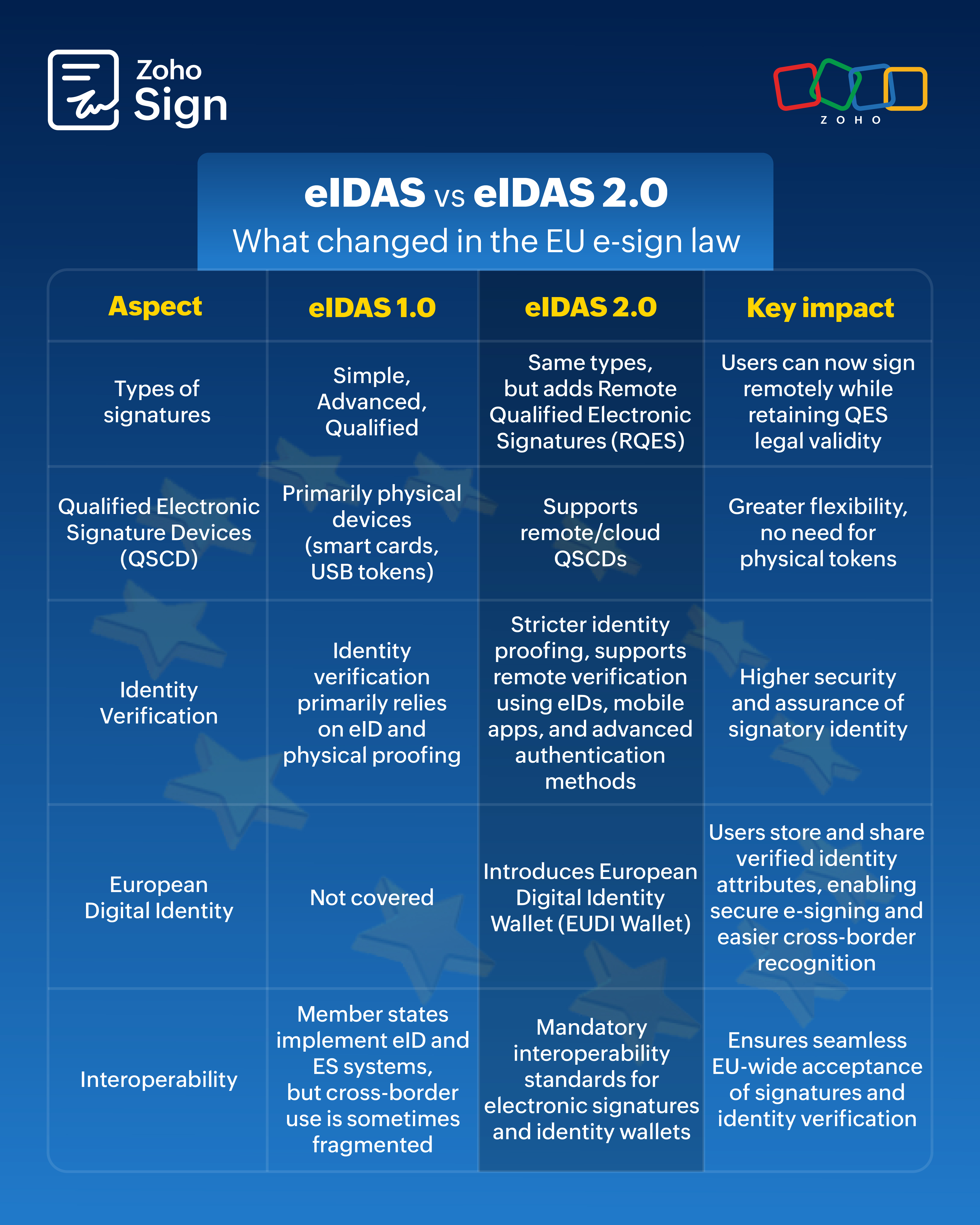
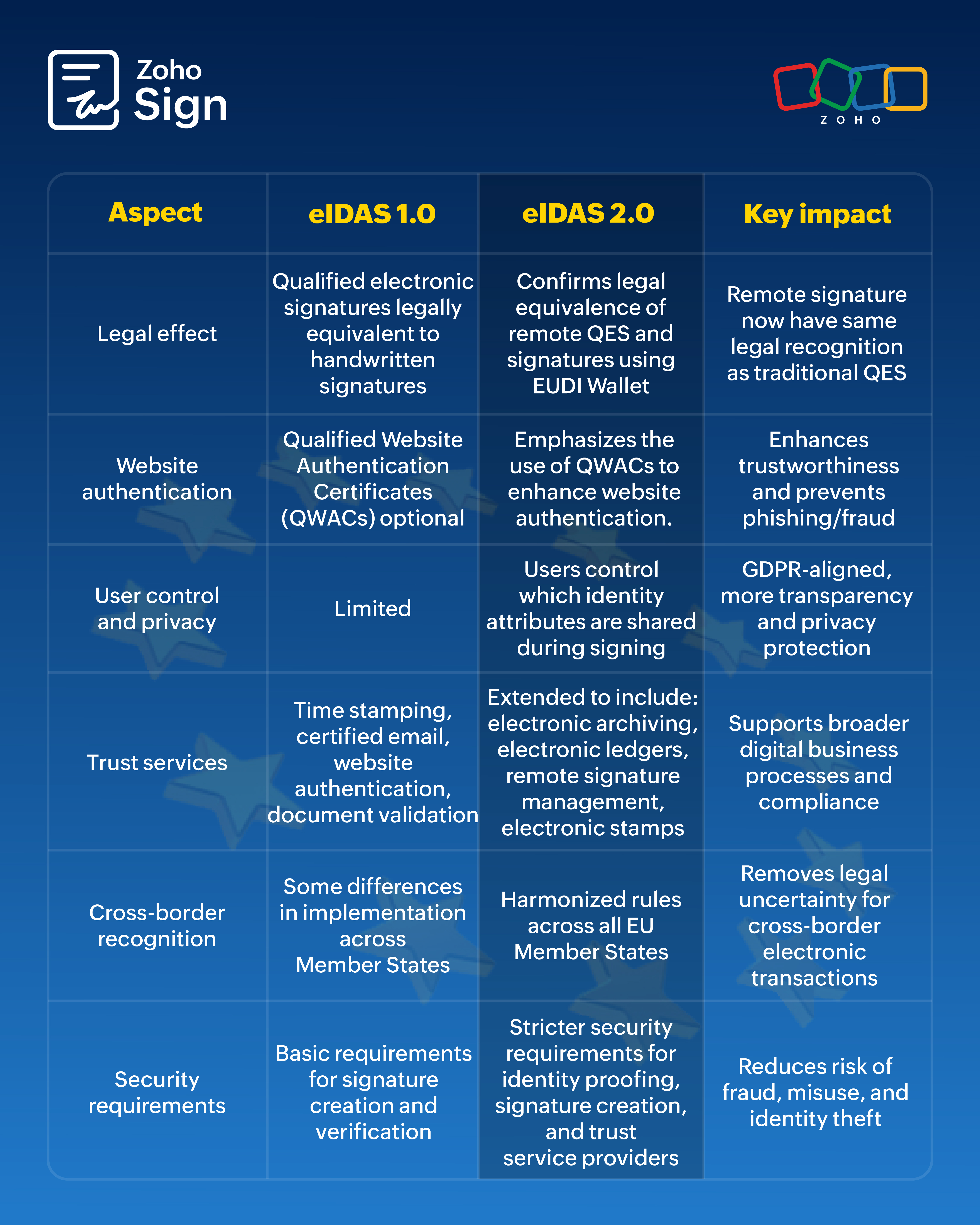
Zoho Sign fully meets the requirements of eIDAS 2.0 through partnerships with qualified trust service providers (QTSPs) like Infocert, Uanataca, itsme, Swisscom, and Evrotrust to offer qualified electronic signatures (QES), which carry the same legal weight as handwritten ones across the EU.
The platform uses EU eID verification, AES-256 encryption, and detailed audit trails to make sure every signed document is authentic, secure, and tamper-proof.
Our partnership with Uanataca also enables qualified seals and timestamps, adding an extra layer of trust and compliance.
By focusing on security, privacy, and interoperability, Zoho Sign helps support eIDAS 2.0's vision of a unified, trusted digital identity ecosystem across the EU.
No two EU countries approach digital signing the same way. When questions about legality come up, it helps to have clear answers. Our country-specific legality pages break down local requirements, common use cases, and how electronic signatures are recognised in each market.
Explore the resources shared above and see how they can support your conversations around eIDAS 2.0 and cross-border digital signing. If you have questions or need help understanding specific country requirements, feel free to drop a comment below or reach out to us at support@eu.zohosign.com.
Rithika Govindarajan