How to send quick updates to respondents on receiving form entries?
Both SMS and Email work best when it comes to notifying your respondents with important updates such as order confirmation messages,
service request update, appointment confirmation, etc. Users may have varying preferences when it comes to receiving email, SMS, or WhatsApp notifications.
The factors that you can consider to decide if you must send an SMS or an email are:
-
How quickly should the message be delivered to the intended recipient?
-
How important is the message's content?
Here are some examples to help you know which type of notification to send your customers under different instances.
Confirmation messages
Customers like to be notified as soon as their orders or appointments are confirmed. Sometimes, it is possible that the user has stopped using the email address to which you're sending notifications. If you need to communicate critical and time-sensitive messages, an SMS notification has a higher likelihood of being read than an email since most people have a mobile device with them at all times.
Learn more about setting up SMS notifications.
Order details and invoices
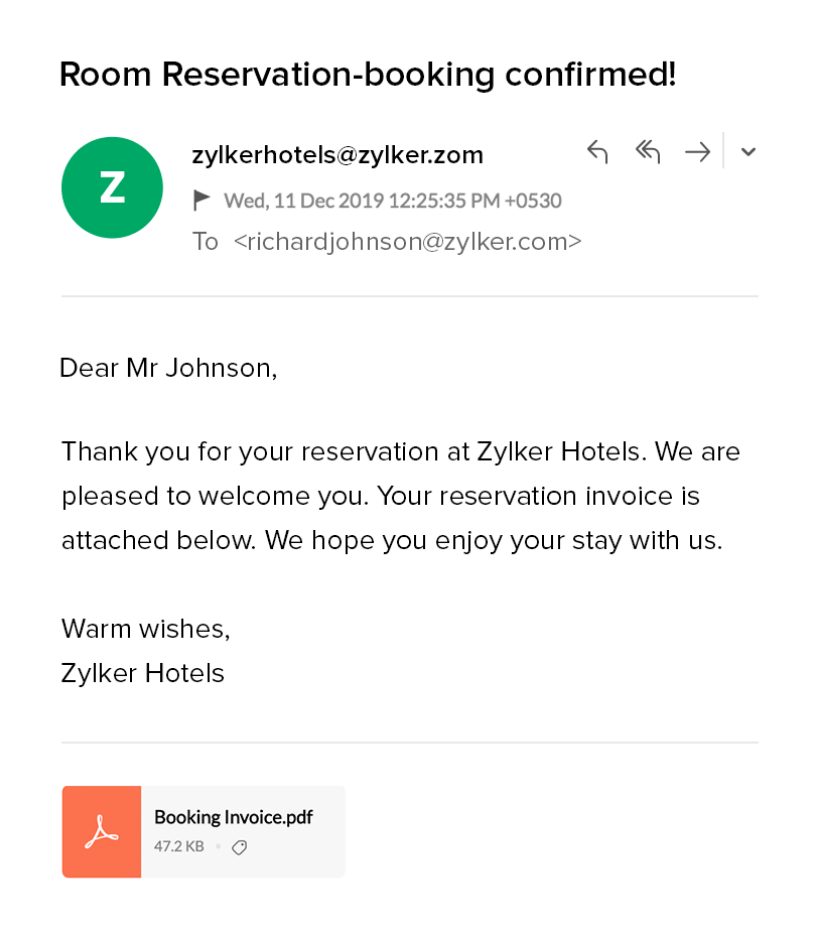
Order Receipts for successful purchases, Interview Call Letters for selected applicants, Invoices, etc., are some important details that users may want to refer to, over time. In addition to immediate SMS notifications, you can send email notifications to users with a copy of their form responses, order receipts, reference numbers, supporting documents, invoices, etc,. to help users keep track of such details and thus build a strong customer base.
Learn more about setting up SMS notifications.
Order details and invoices
Order Receipts for successful purchases, Interview Call Letters for selected applicants, Invoices, etc., are some important details that users may want to refer to, over time. In addition to immediate SMS notifications, you can send email notifications to users with a copy of their form responses, order receipts, reference numbers, supporting documents, invoices, etc,. to help users keep track of such details and thus build a strong customer base.

It may be necessary to configure both SMS and email notifications at times to ensure that your customers receive critical updates quickly and have them for future reference at the same time.