Kaizen #202 - Answering Your Questions | Testing and Using REST APIs in Widgets

Hello Developers!
Welcome back to a fresh week of Kaizen!
Thank you for your active participation in sharing feedback and queries for the 200th milestone. This week, we will look at the following queries related to widget:
- Widget Testing
- Using REST API in Canvas Widgets: Make HTTP calls in widgets (e.g., to external tax or product APIs)
Here are the queries that we have already answered for you from this milestone:
- Kaizen #200 - Answering Your Questions | Token generation using the Python SDK
- Kaizen #201 - Answering Your Questions | Webhooks, Functions, and Schedules
Widget Testing
One of the queries we received was simply stated

Widget Testing
without any specific context. Since the user has not provided detailed input, we are assuming this is about how to test a widget during development.
You can test your Zoho CRM widget locally using the Zoho CLI. Run the following command from the root directory of your widget project:
zet run |
This launches the widget on a local server where you can validate the UI and functionality before pushing it live.
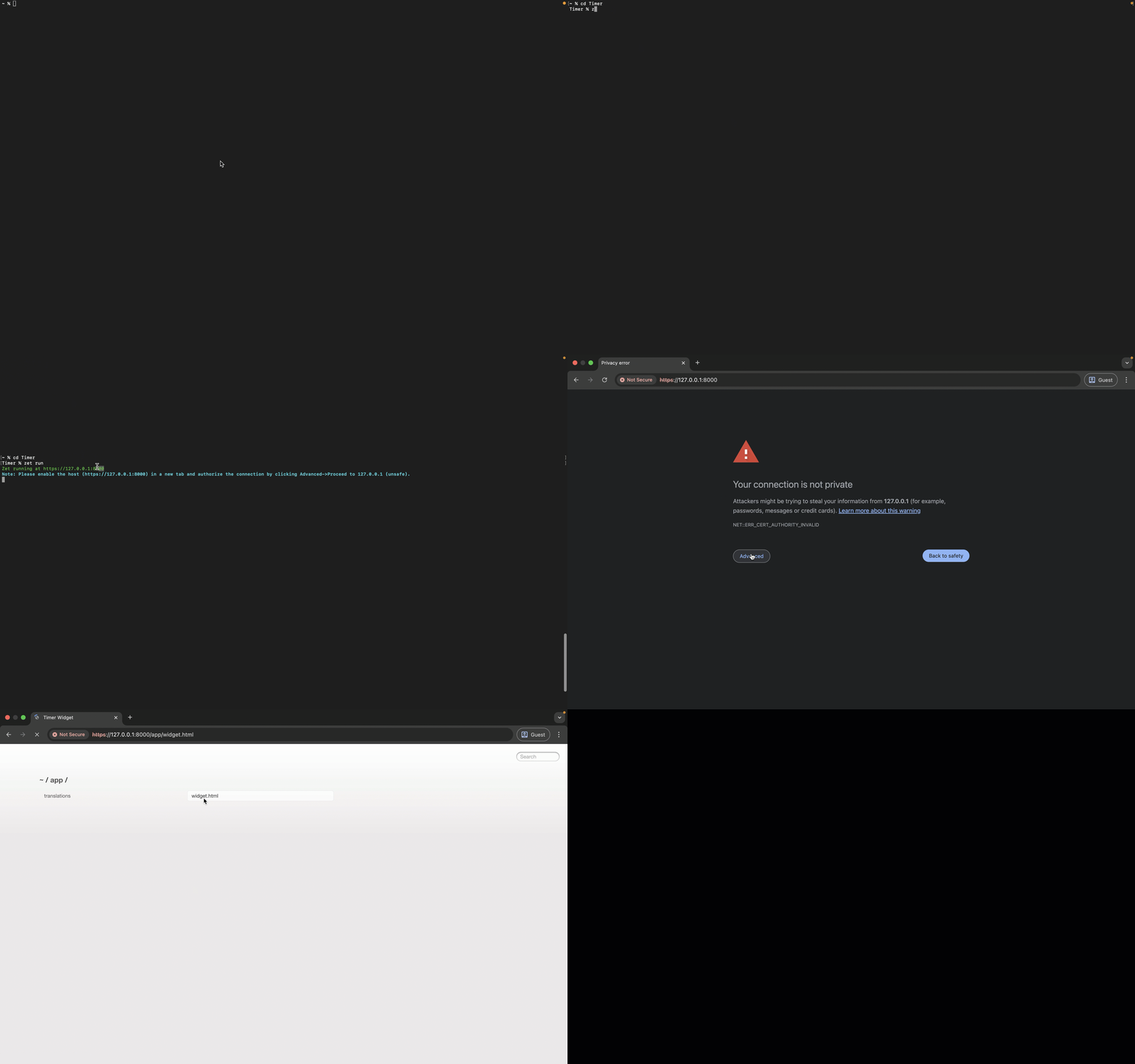
Since the localhost connection opens in a new tab and is not private, you will need to manually authorize it.
Click Advanced, then choose Proceed to 127.0.0.1 (unsafe) to continue.

Note
If your widget needs to access data from your Zoho CRM organization, such as fetching or updating records, it must be deployed within a Zoho CRM iframe. To do this, you should upload the widget through the Zoho CRM Widgets setup page.
We recommend using the sandbox environment in such cases before deploying the widget to your production environment.
Making HTTP Calls from Widget
Following is a query we received from a user:
Using REST API in Canvas Widgets: Make HTTP calls in widgets (e.g., to external tax or product APIs)
Yes. You can make HTTP requests to external services from any type of Zoho CRM widget using the ZOHO.CRM.HTTP object from the Widget JS SDK.
Canvas Widget - What's Supported?
Though full widget support within Canvas is on our roadmap, currently, you can invoke widgets from a Canvas view using Client Script. This lets you render widgets inside fly-outs or pop-ups. Here is a quick start guide on how you can achieve it:
Create a Widget
1. Create a widget project and code your logic using Zoho CLI as explained in our widget help page.
2. In Zoho CRM Developer Hub, create a new widget and set the type as Button.

Create a Client Script
3. Navigate to Client Scripts in Developer Hub and click New Script.
4. You can create your script either in the Modules or Commands category based on your use case.

In the Category Details section, ensure to select Canvas as the page type. Canvas views are supported in the following page contexts: List, Detail, Create, and Clone.
Choose the one that aligns with where your widget needs to appear.

5. Here is the sample script to render widget in a pop-up.
ZDK.Client.openPopup({ api_name: 'Canvas_Widget', type: 'widget', animation_type: 4, height: '450px', width: '450px', }, { data: 'sample data to be passed to "PageLoad" event of widget' }); |
Here is the sample script to render widget in a fly-out.
ZDK.Client.createFlyout('myFlyout', { animation_type: 4, height: '600px', width: '500px' } ); ZDK.Client.getFlyout('myFlyout').open({ api_name: 'Canvas_Widget', type: 'widget' }); |
You can also check out the Kaizen #99 on Rendering Widgets using Client Script for a detailed guide based on a real-time use case.
Using REST APIs from External Applications
The ZOHO.CRM.HTTP object enables you to make secure API calls directly from the Zoho CRM widget. It acts as a proxy, routing requests through Zoho servers, which eliminates the need for external applications to support CORS.
While this SDK is primarily used for integrating third-party services, it also supports Zoho CRM API calls. This provides you with greater flexibility to:
- Customize header and parameter structures
- Maintain a consistent calling pattern for both internal and external APIs within the widget.
Here is a basic syntax of the SDK:
ZOHO.CRM.HTTP.<method>({ url: "<request-url>", headers: { // Request headers as Key-value pairs "Authorization": "Bearer <token>" // example }, params: { // Request params as Key-value pairs "ids": "1234567890" // example }, body: "<stringified JSON>", // Required for POST, PUT and PATCH }) .then(function(response) { console.log("Response:", response); }); |
Supported Methods
- ZOHO.CRM.HTTP.get({ ... })
- ZOHO.CRM.HTTP.post({ ... })
- ZOHO.CRM.HTTP.put({ ... })
- ZOHO.CRM.HTTP.patch({ ... })
- ZOHO.CRM.HTTP.delete({ ... })
For more detail check out the HTTP method section of JS SDK help page.
Samples using Zoho CRM Contact Roles API
Let us explore a complete CRUD (Create, Read, Update, Delete) example using Zoho CRM’s Contact Roles API.
These structures have to be used within the JS function where you are executing your code logic.
POST Contact Roles
POST Contact Roles
// Prepare the API request var request = { url: "https://www.zohoapis.com/crm/v8/Contacts/roles", headers: { Authorization: "Zoho-oauthtoken 1000.XXXXXXXXXXXXXXXXXXX265bcf20e4" }, body: { "contact_roles": [ { "name": "Sales Lead", "sequence_number": 1 } ] } }; // Make API call ZOHO.CRM.HTTP.post(request).then(function(data) { console.log(data); }) |
GET Contact Roles
// Prepare the API request var request = { url: "https://www.zohoapis.com/crm/v8/Contacts/roles", headers: { Authorization: "Zoho-oauthtoken 1000.XXXXXXXXXXXXXXXXXXX265bcf20e4" } }; // Make API call ZOHO.CRM.HTTP.get(request) .then(function(response) { console.log(response); }) |
UPDATE Contact Roles
// Prepare the API request var request = { headers: { Authorization: "Zoho-oauthtoken 1000.XXXXXXXXXXXXXXXXXXX265bcf20e4" }, body: { "contact_roles": [ { "name": "Evaluator", "id": "5545974000000006871" } ] } }; // Make API call ZOHO.CRM.HTTP.put(request).then(function(data) { console.log(data); }) |
DELETE Contact Roles
// Prepare the API request var request = { params: { ids: "5545974000002617002" }, headers: { Authorization: "Zoho-oauthtoken 1000.XXXXXXXXXXXXXXXXXXX265bcf20e4" } }; // Make API call ZOHO.CRM.HTTP.delete(request).then(function(data) { console.log(data); }) |
We hope you found this post useful.
Let us know if you have any questions in the comments or drop us an email at support@zohocrm.com.
Cheers!
------------------------------------------------------------------------------------------------------------------------
Related Reading
1. Widget - An Overview, CLI Installation, Working with Widgets, JS SDKs, Mobile Compatibility of Widgets and Kaizens
3. Canvas - Getting Started, Purpose and Benefits
------------------------------------------------------------------------------------------------------------------------

Previous Kaizen : Answering Your Questions | Webhooks, Functions, and Schedules | Kaizen Directory: Home