Understanding Developer Console
1. What does this page cover?
Learn about Zoho Developer Console and how developers can use it to create and distribute applications to a large community using Zoho Marketplace or privately sharing them with clients.
2. Availability
3. Overview
The Zoho Developer Console is a free platform that enables developers to build powerful applications using the latest version of Zoho Creator (Creator 6). Developers can distribute and monetize these applications through two main distribution types:
- Marketplace distribution: This method is suitable for applications with broader purposes that can be used by a large community of users. Applications distributed through Zoho Marketplace are accessible to a wide audience, allowing developers to reach more clients and generate revenue. Once the application is listed on Marketplace, clients can install and start using the application.
- Private distribution: This method is ideal for delivering customized applications to specific clients. It allows developers to share tailored solutions that meet an organization's unique needs. Applications can be shared either as a trial or with subscription-based validity, offering control over access and flexibility in usage.
Developer Console gives a platform for Partners and developers to monetize their applications by allowing them to set their own pricing for their published apps. Developers can also easily deliver updates and bug fixes without disrupting the applications installed by their clients by using dedicated development and testing environments.
3.1 Benefits of the platform
- Source code protection: Applications created and shared using Developer Console don't require sharing of the source code with clients. Because the backend is hidden, the risk of unauthorized modifications to the app and its source code is greatly reduced.
- Dedicated development environment: The platform provides a dedicated environment for development and testing, allowing continuous development without interfering with the live version of the app.
- Efficient update distribution: The platform simplifies the CI/CD process, and developers can perform continuous deployment of updates to the applications installed by their clients.
- Zero cost: The platform is available free of charge.
- Developer collaboration: The platform allows multiple developers to collaborate on a project, thereby increasing productivity and efficiency.
3.2 Creator vs Developer Console
|
|
Zoho Creator |
Zoho Developer Console |
|
Target users |
Business users, team leaders, and various departments within an organization, like HR, marketing, and sales
|
Solution providers, like Partners and developers
|
|
Usage |
Mainly curated for users within an organization
|
Distributed externally to Marketplace and private clients
|
|
Cost and monetization
|
There is no monetizing aspect, as the primary use is to ease internal business processes
|
Partners and developers can monetize the apps they create by distributing them to clients
|
3.3 Creating a Developer Console account
If you're signing up for the first time, you must access Developer Console by entering the necessary details on this page.
If you're already a Developer Console user, you (the super admin) can start building your applications right away by clicking Zoho Creator > Start building.
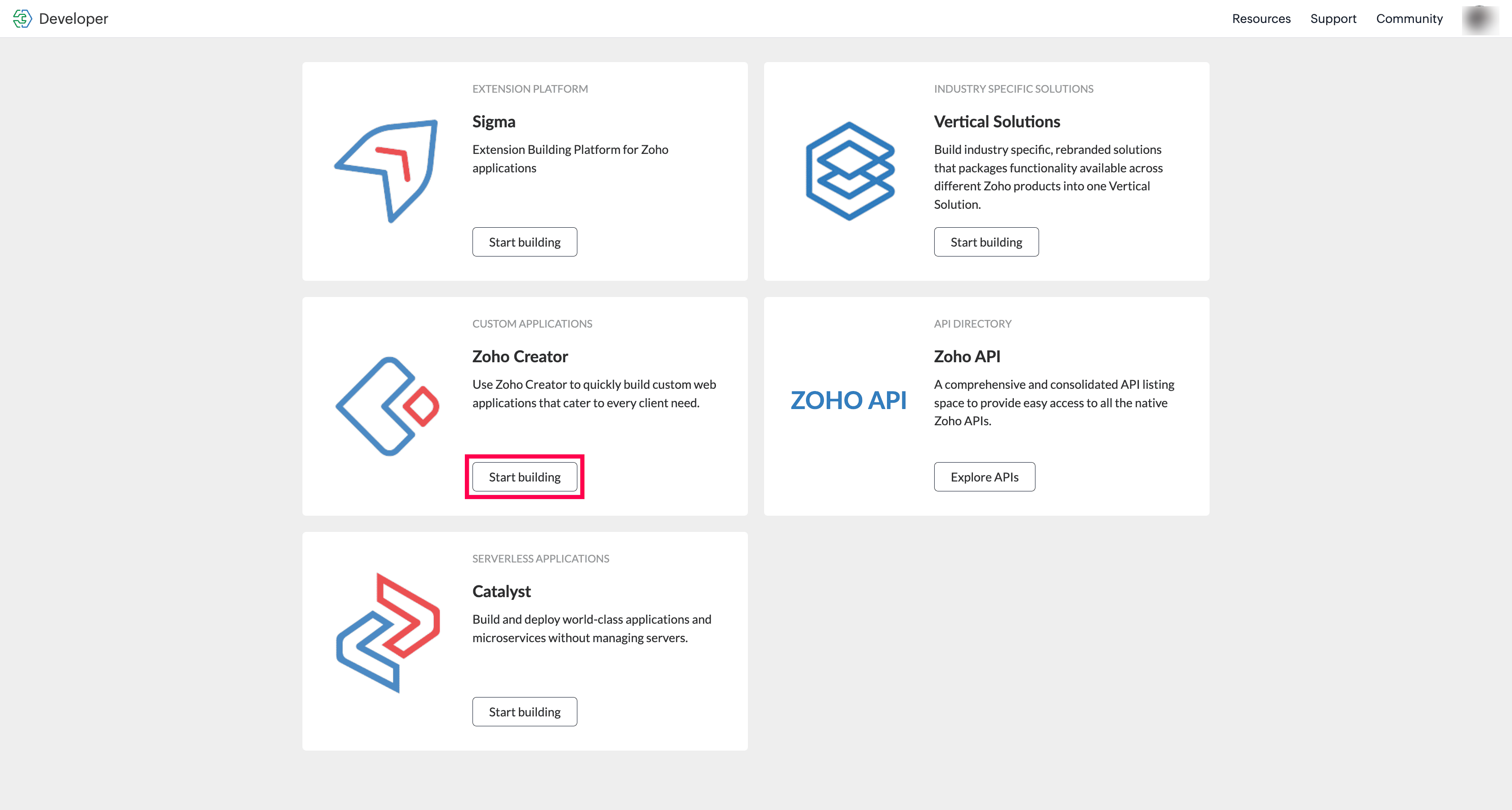
When creating an application for the first time, you'll be prompted to read and agree to the Terms and Conditions.
3.4 Using Developer Console
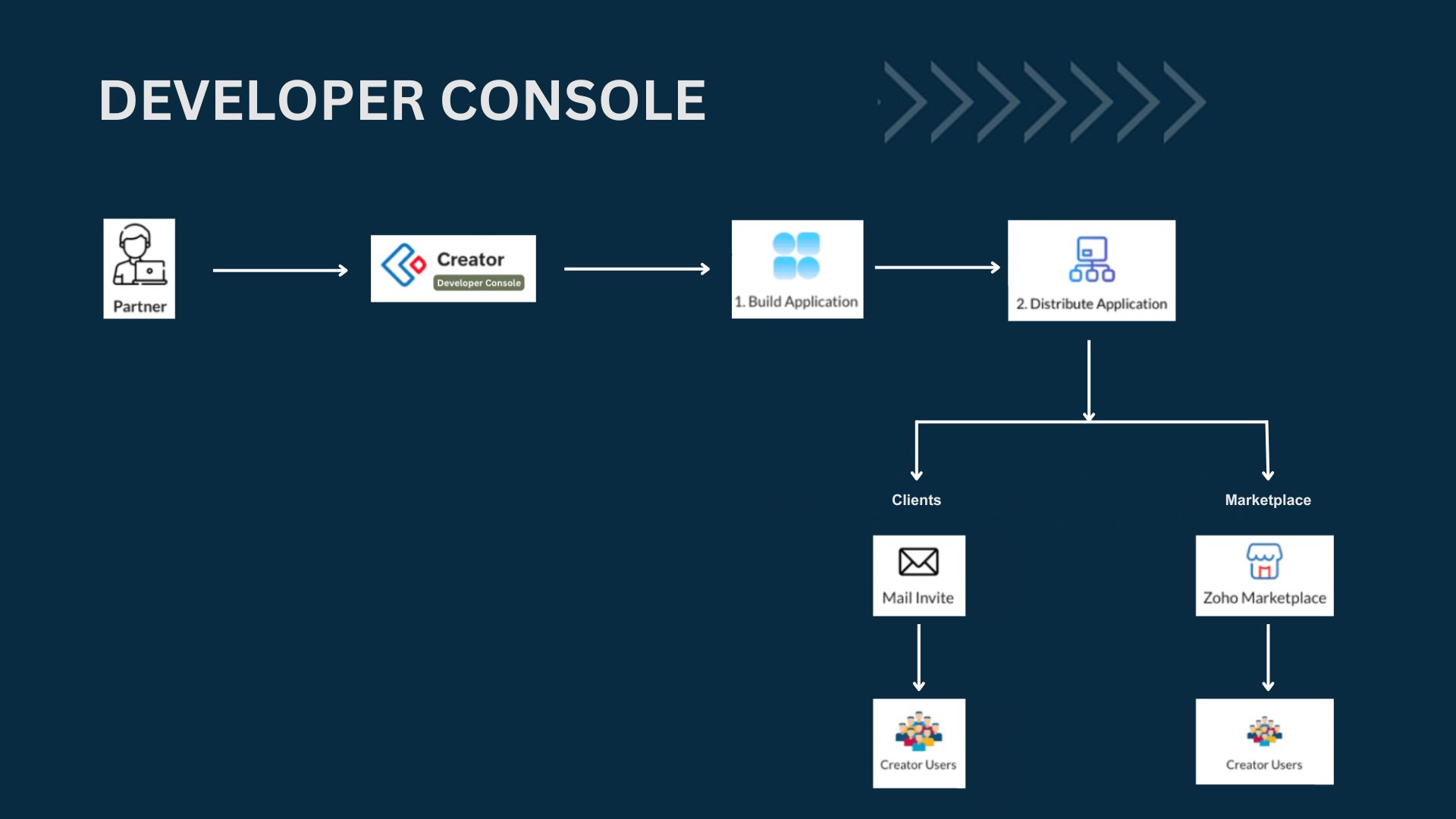
Once an account is created, the account owner is considered the super admin. They can start creating an application by choosing the distribution type as Marketplace or Private Clients. They can then assign more developers who can continue with the application development process:
- As the application is being developed, you can preview it simultaneously in a development environment to ensure it functions correctly.
- Next, you can publish the application to stage environment for thorough testing.
- Upon completion of testing, for public distribution, you can submit the application to Zoho Marketplace, where the application undergoes a review before being distributed. This step can be performed only by the super admin.
- For private distribution, you can add specific clients and deploy the application to their environments. This step can be performed by only the super admins.
- Finally, you can manage the application post-publication to keep it updated and functional.
The following flowchart provides an overview of the process for setting up and distributing applications using Developer Console:
4. Use cases
- Sharing an application to Marketplace -
Using Developer Console, you can submit your tested app to Zoho Marketplace, where it will undergo a review process. Once approved, your app becomes available for anyone to install, either for free or as a monetized product. This allows you to reach a wider audience, gain more clients, and potentially generate revenue. Additionally, the platform's distribution capabilities enable you to manage app updates efficiently, ensuring a seamless experience for all clients. - Sharing an application privately with your clients -
Imagine you're a developer and a client approaches you with a requirement for a custom application tailored to their business needs. Using Developer Console, once the app is developed and tested, you can share the application exclusively with your client, ensuring that only they have access to it. This approach allows you to deliver a highly customized application while maintaining control over who can use the application. Your client benefits from a tailored application that meets their unique needs, while you ensure a secure and exclusive distribution.
5. Related topics
What's next
What's next
The next step after learning about Developer Console is to start creating an app.