Integrate Google Universal Analytics with Zoho PageSense
With the Google Universal Analytics(UA) integration, you can track the web metrics of each variation in your experiment running on Zoho PageSense.

This page will provide you details on how you can integrate Zoho PageSense with Google Analytics using the following methods:
- Using gtag.js global snippet (launched in beta in 2017), and
- To enable the integration, make sure you've added the Google Universal Analytics global snippet and Zoho PageSense's code snippet in the pages you want to track. After you set it up once, it will automatically run for all of your experiments.
- You will be able to use this integration exclusively with A/B test and split URL test experiments in PageSense.
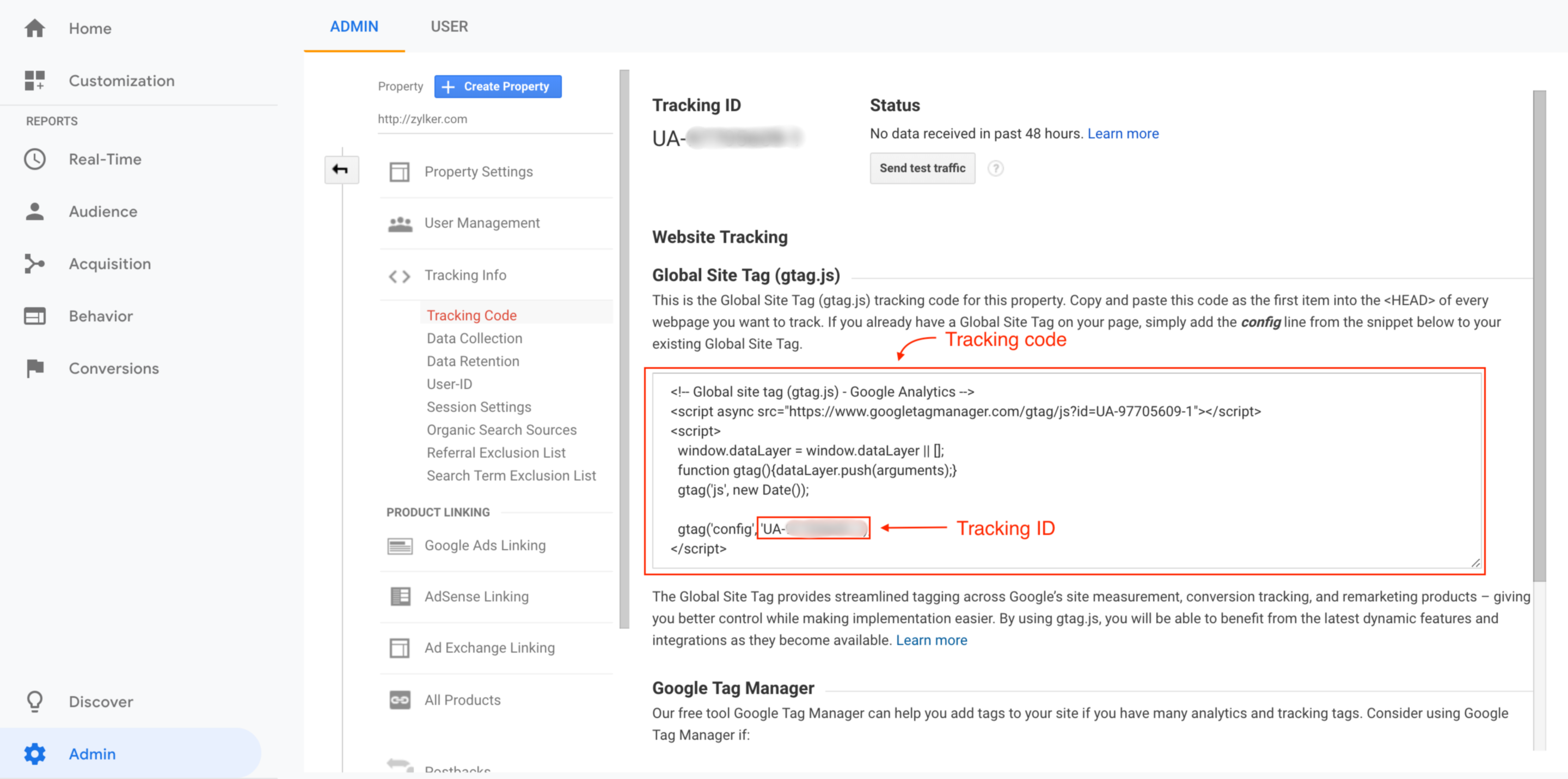
You will be able to find the tracking code for Google Universal Analytics here:
Set up Google Analytics
1. Login to your Google Analytics account and select the Admin option on the bottom left corner.
2.Click Custom Definition under the Property section and select Custom Dimension.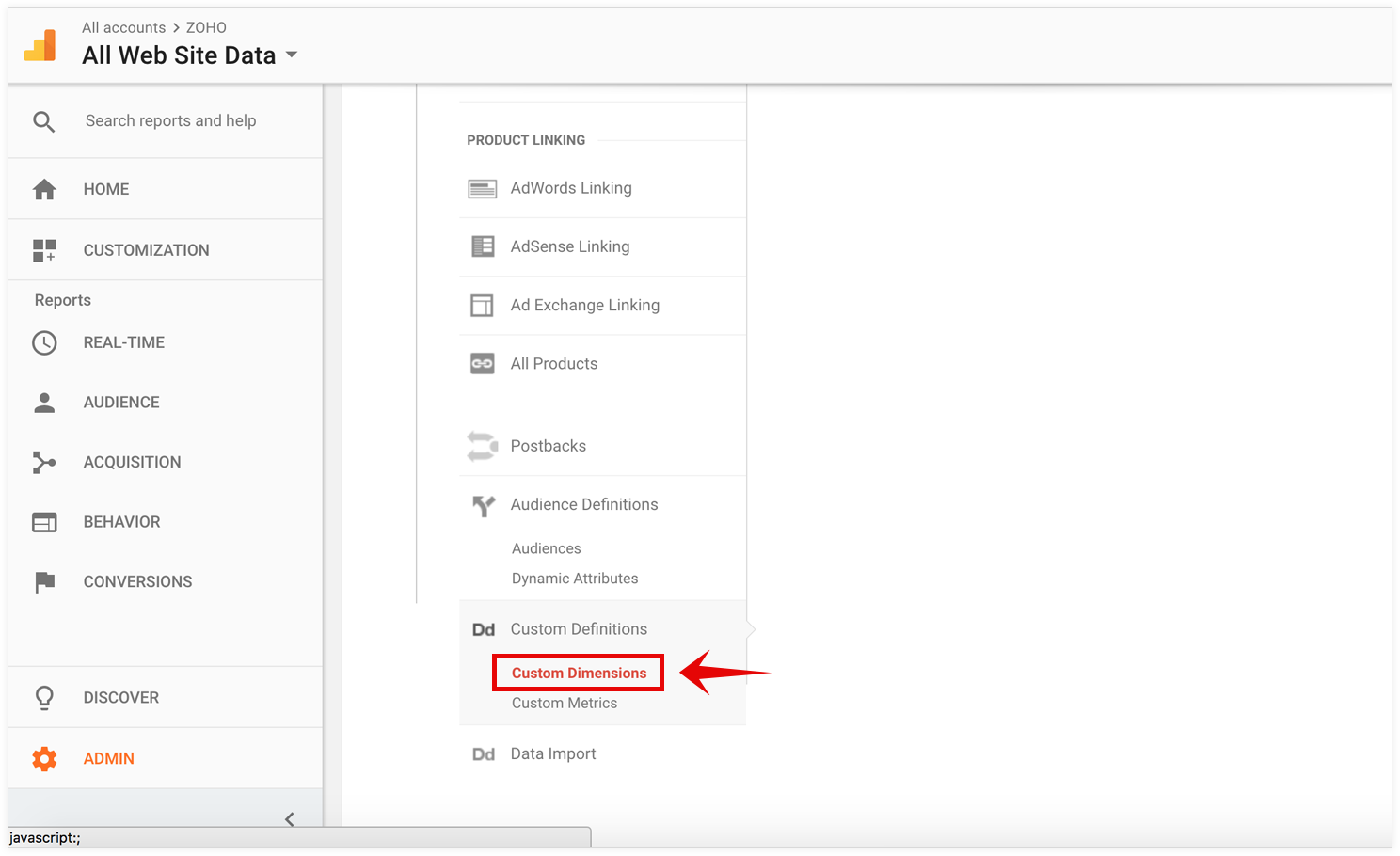
3. Click +New Custom Dimension on the right pane.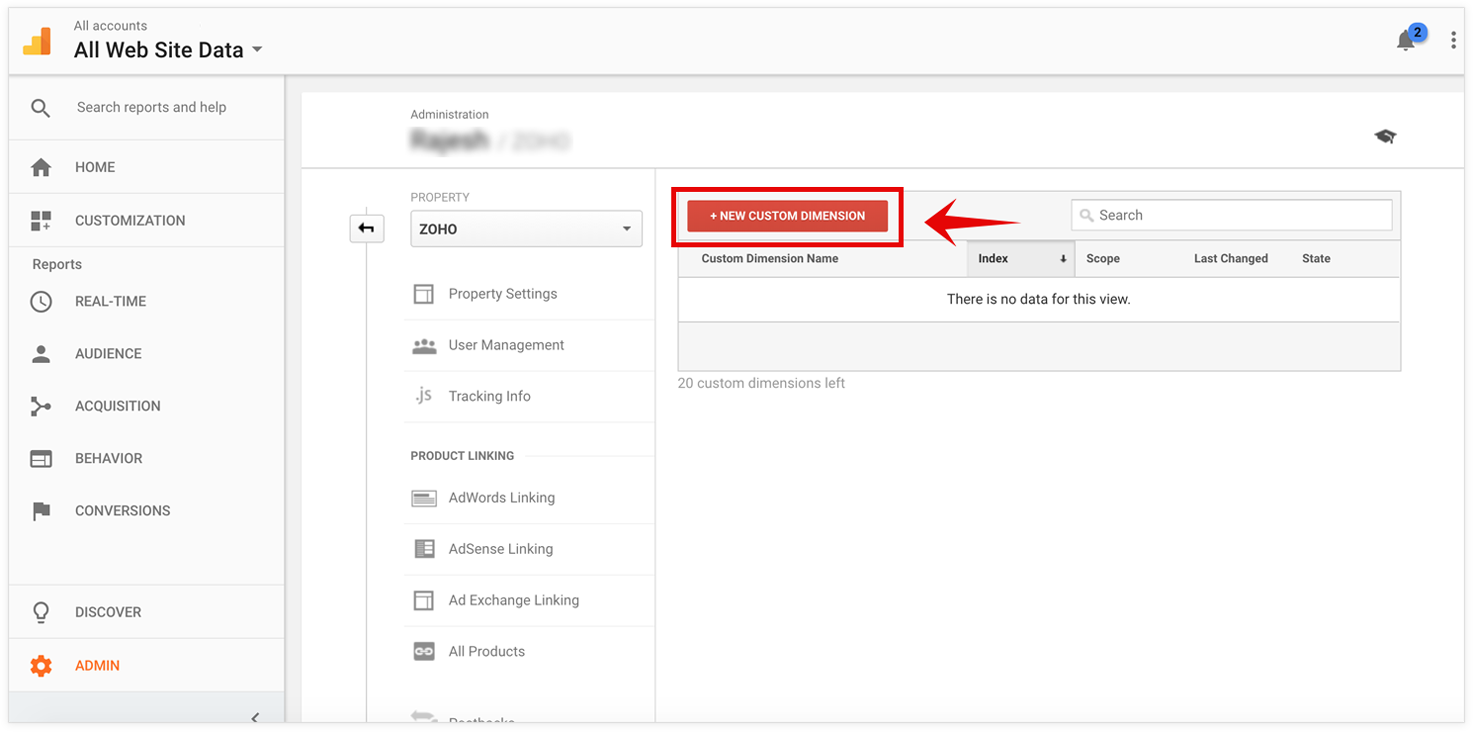
4. Give your Custom Dimension a name and click Create. Make a note of the Custom Dimension Number that you've created.
2.Click Custom Definition under the Property section and select Custom Dimension.
3. Click +New Custom Dimension on the right pane.
4. Give your Custom Dimension a name and click Create. Make a note of the Custom Dimension Number that you've created.
Make a note of the Tracking ID of your Google Analytics Account as well. Set up PageSense
1. Click the Integrations option in the top pane of the experiment listing page. Enable Google Analytics .
2. Next, open the experiment (A/B or Split URL test) which you wish to integrate with Google Analytics.
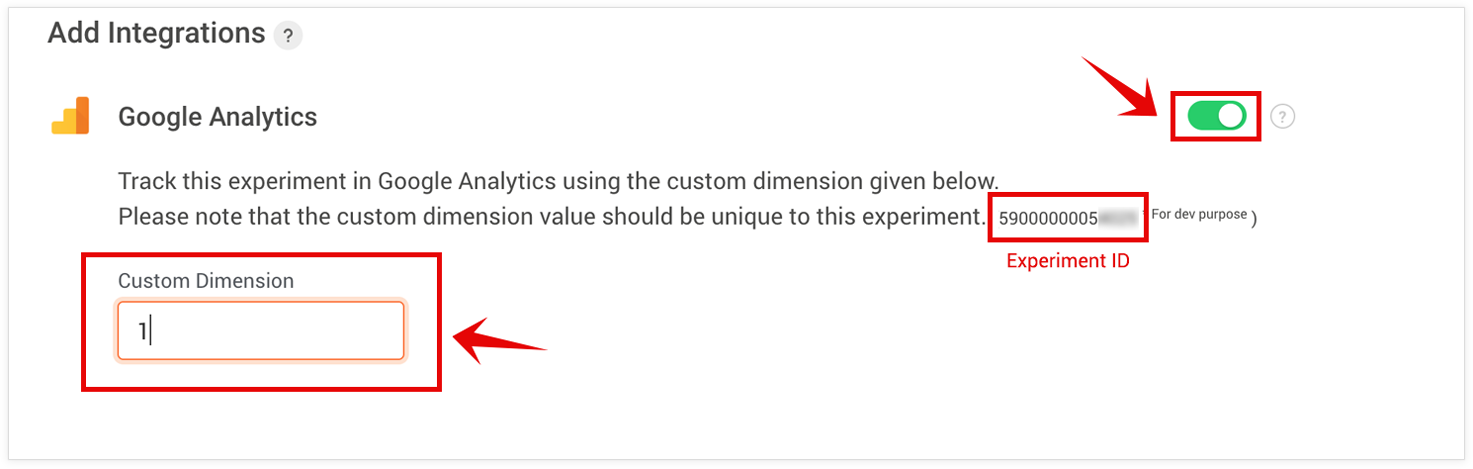
3. Select the Configurations tab in the experiment, under the Integrations section, enable Google Analytics.
4. Change the Custom Dimension value to match the one you noted in Google Analytics. Make a note of the Experiment ID.
5. Set up your experiment with the required configuration and launch it.
5. Set up your experiment with the required configuration and launch it.
Add the tracking code
While using gtag.js global snippet
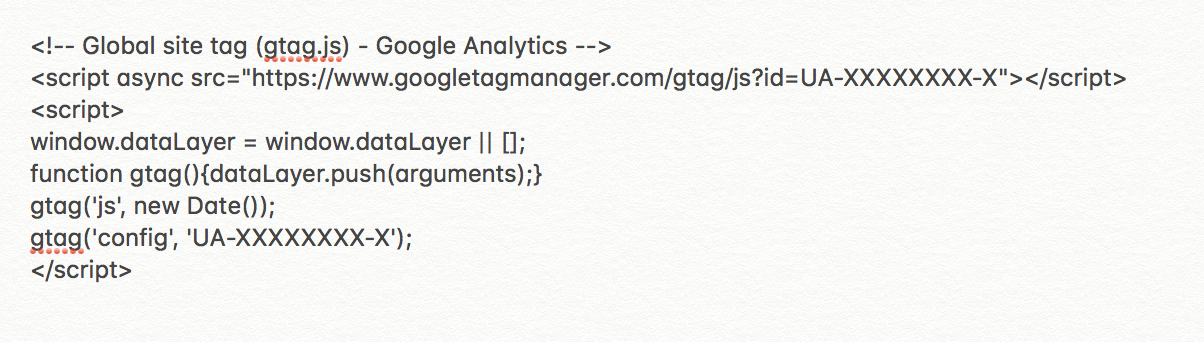
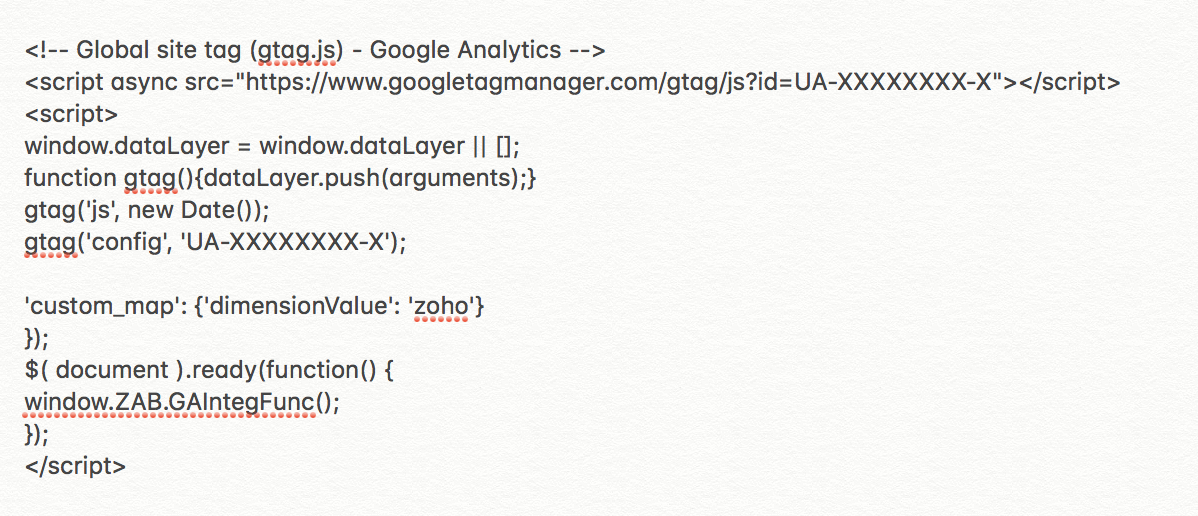
01. Copy the following line of code and paste it immediately below the gtag ('config','UA-XXXXXXXX-X') code of your website as shown in the figure.
'custom_map': {'dimensionValue': 'zoho'}
});
$( document ).ready(function() {
window.ZAB.GAIntegFunc();
});
Before adding the code:
After adding the code:
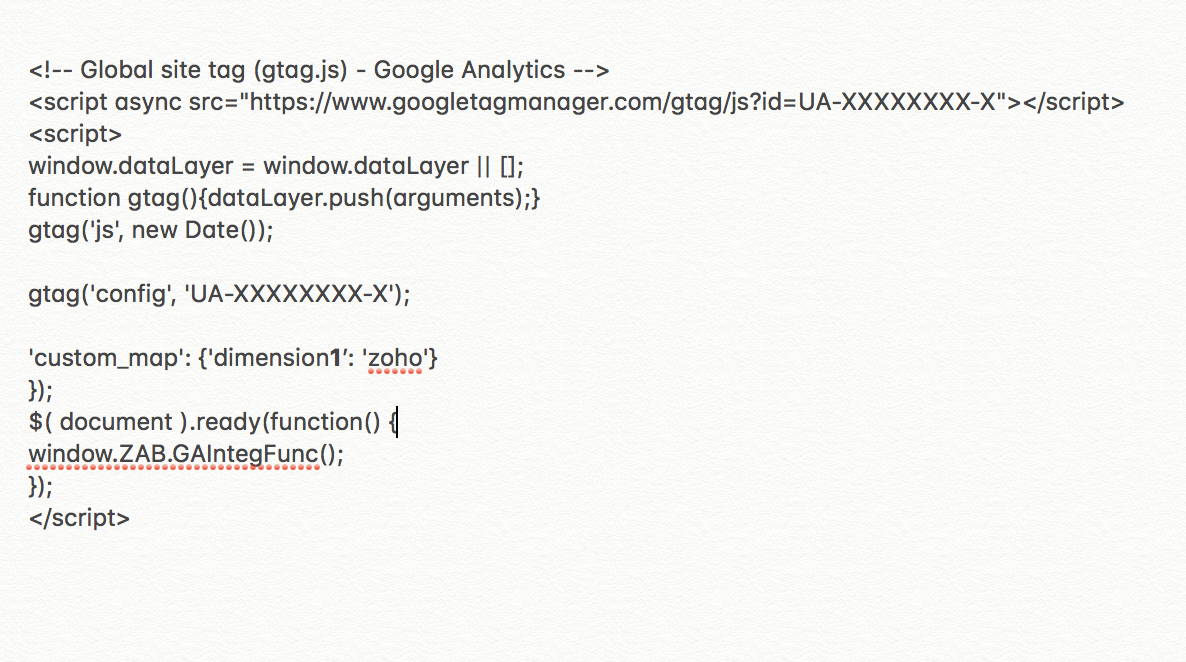
02. Now replace the “Value" key in " dimensionValue" with the Custom Dimension Number that you obtained from Step 04 of the Setup PageSense procedure.
'custom_map': {'dimensionValue': 'zoho'}
});
$( document ).ready(function() {
window.ZAB.GAIntegFunc();
});
Before adding the code:
After adding the code:
02. Now replace the “Value" key in " dimensionValue" with the Custom Dimension Number that you obtained from Step 04 of the Setup PageSense procedure.
While using analytics.js library tracking snippet
1. Paste t
1. Select Customization in the left pane and click + New Custom Report.
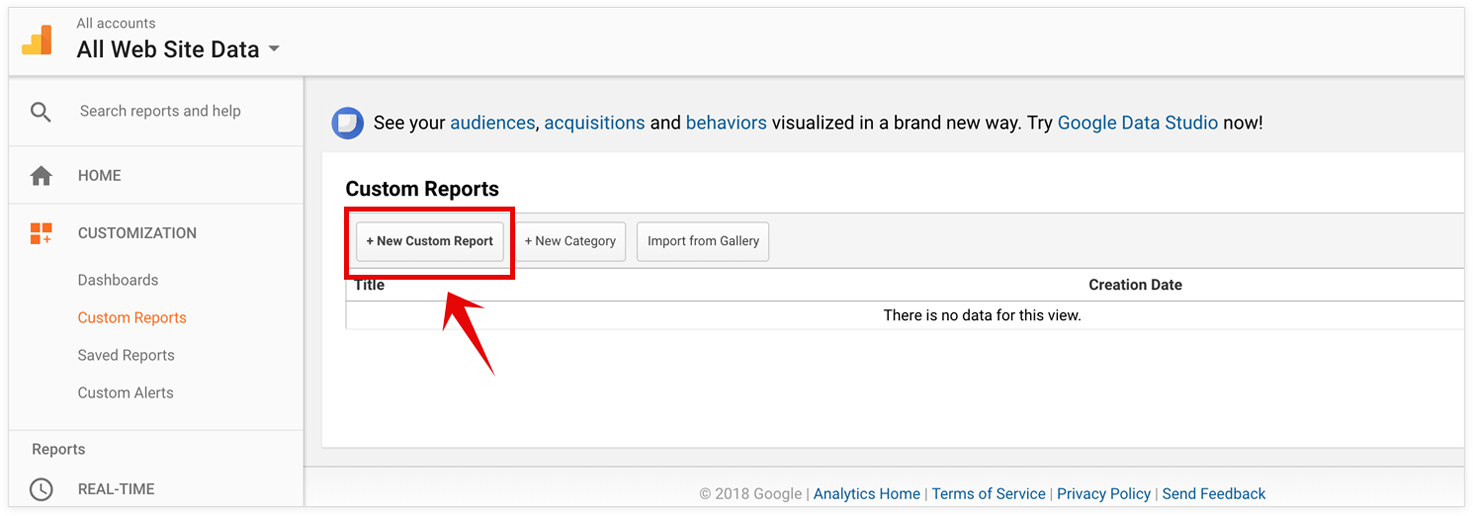
2. Give your custom report a title.
3. In the Report Content section, select the custom dimension created as the Dimension Drilldown .
4. Add the same custom dimension in the Filters section.
5. Select Regex from the adjacent dropdown. Enter the Zoho PageSense Experiment ID you noted in Step 2 in the text box that appears.
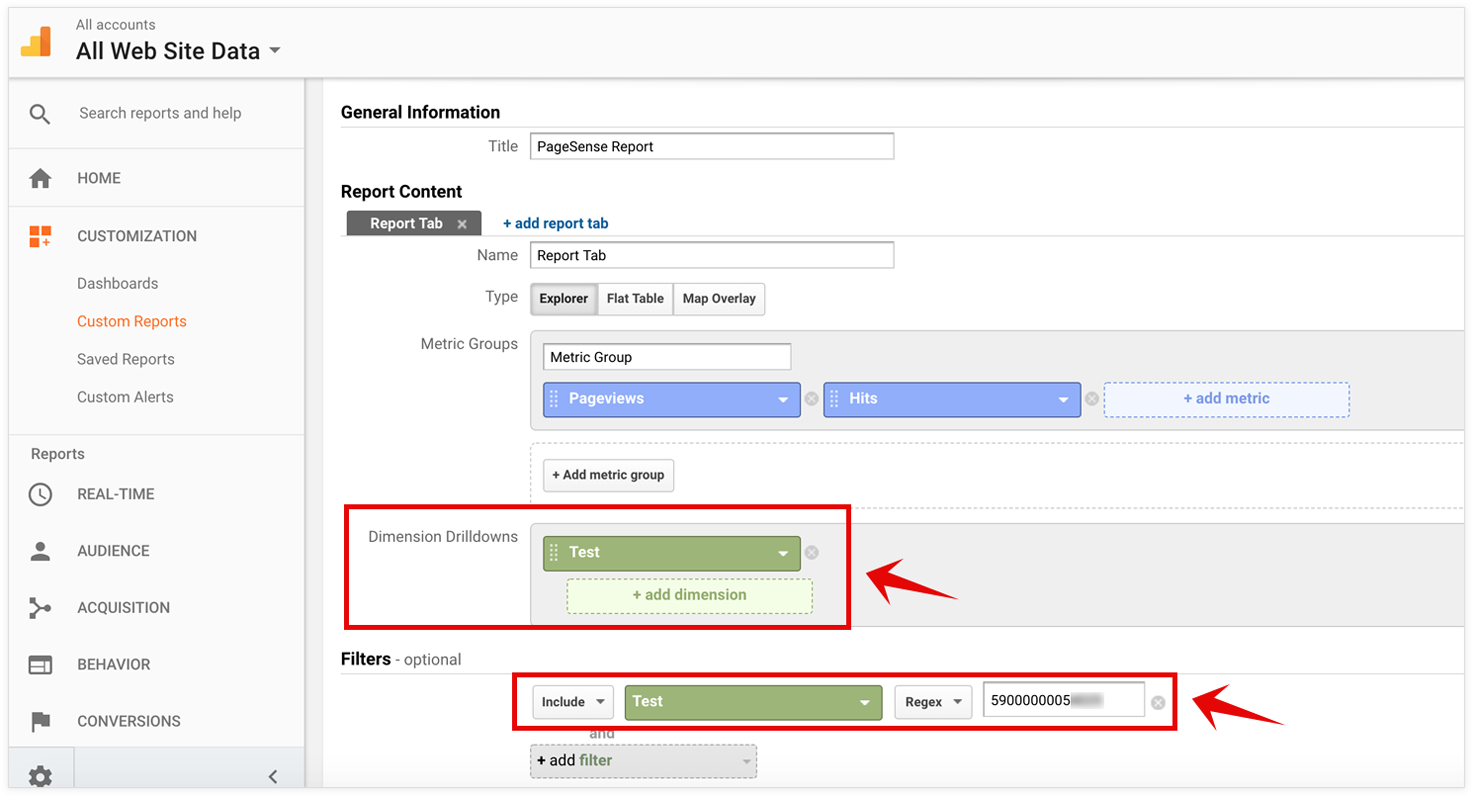
6. Click Save to create a custom report.
6. Click Save to create a custom report.
After launching the Zoho PageSense experiment, you'll be able to view the custom report in Google Universal Analytics.