Audit log


 Audit Log is a chronological record of appointment-related activities performed in Zoho Bookings. It captures details such as who performed an action, what was changed, and when the change occurred, helping maintain transparency and accountability. You can use the Audit Log to trace all changes made to an appointment, verify user actions, and troubleshoot issues.
1. How audit log works
Audit Log records important appointment-related activities, such as appointment creation, reschedules, cancellations, payment updates, workflow executions, notification triggers, and integration actions. It also captures failures during integrations or automation processes along with error details and retry options for quick resolution.
Example: Zylker Academy, an online training institute, uses Zoho Bookings to schedule instructor-led classes. A student books a Python Basics session for 15 August 2026, 10:00 AM, which is assigned to Instructor Sarah Johnson. Later, Sarah reschedules the class to 11:00 AM, and the student updates the meeting location from Room A-201 to Room B-105. The Audit Log
records who made each change, what was modified, and when it occurred. This helps the admin verify schedule changes, resolve disputes, and maintain an accurate history of all booking activities.
Who can access this feature? | |
Available on | |
Super admin and admins | Can view the audit log info for all appointments |
Workspace admins and managers | Can view the audit log info only for their assigned workspaces |
Staff | Can view the audit log info related to the appointments assigned to them |
2. Audit Log in admin center
The Audit Log feature in the Admin Center provides a complete view of appointment-related logs. It includes actions related to setup, configuration, and integrations. These records help you to track:
- Calendar syncs and authorization updates
- Meeting link generation (Zoho Meeting, Zoom, etc.)
- CRM/Bigin contact creation and updates
- Zoho Assist link generation
- Workflow execution (Zoho Flow, Zapier, or custom workflows)
- Notification triggers (Email, SMS, or WhatsApp)
This broader visibility helps super admin and admins track both operational and org level changes and ensures end-to-end accountability.
2.1 To view the audit log in the admin center:
- Click the Admin Center
icon at the top-right corner.
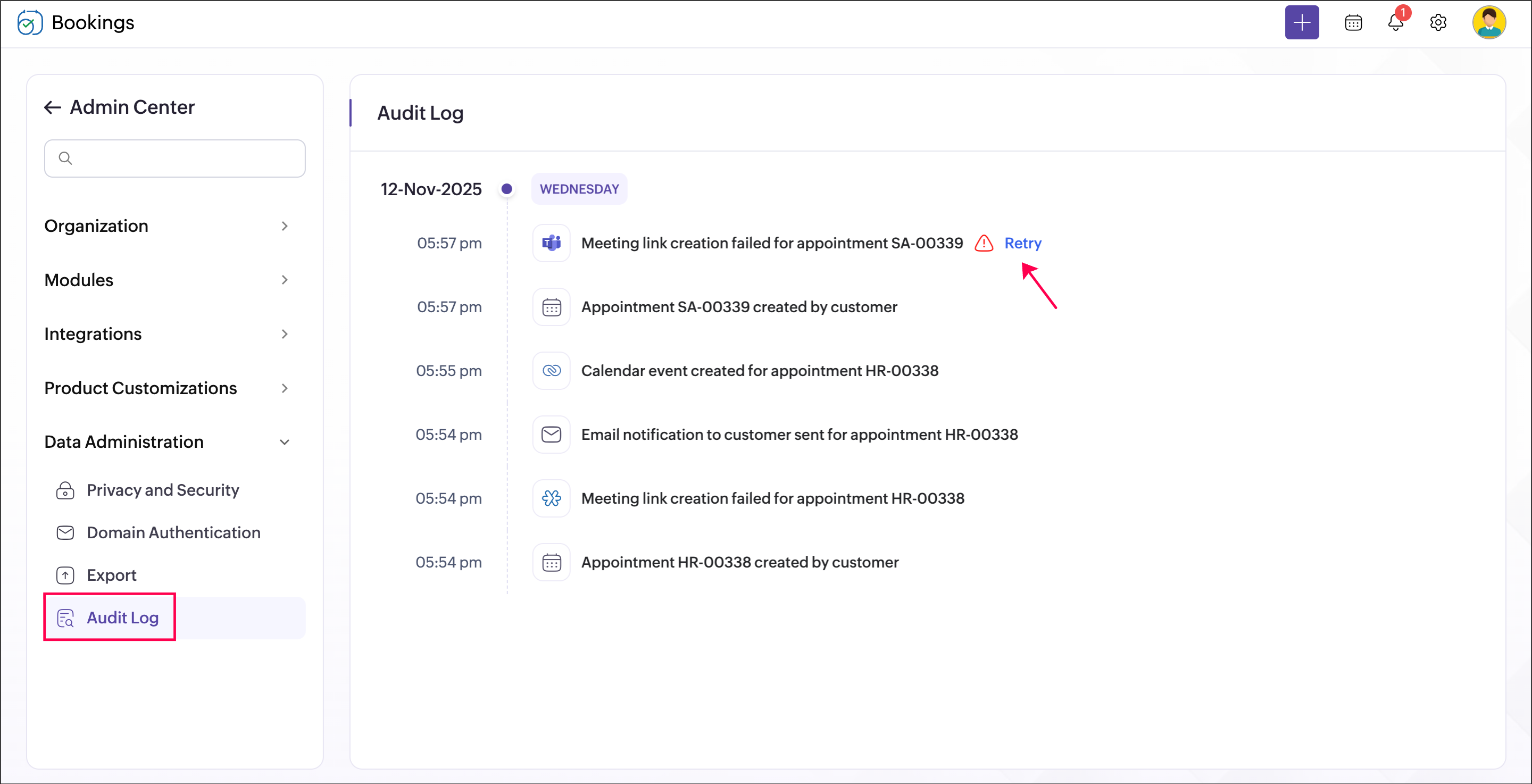
- Under Data Administration, select Audit Log to display a detailed list of all recorded actions.
3. Audit log in appointment summary
The Audit Log in the appointment summary provides a quick view of all changes related to a specific appointment. It captures who made the change, what was modified, and when it occurred. These records help you to track:
- Appointment creation, reschedules, and cancellations
- Status updates (Confirmed, Completed, No Show, etc.)
- Payment updates or failures
- Notification triggers sent to staff or customers
- Notes field updates
- Custom field updates
This provides a focused view of all actions related to a specific appointment. It helps track updates, cancellations, reschedules, and payments, ensuring accountability at the appointment level.
3.1 To view the audit log in an appointment summary:
- Click the Appointments tab in the left pane of the required workspace.
- Choose the required tab — Upcoming, Past, or Custom Date and select the appointment.
- The appointment summary will open in a slider from the right. Click the Audit Info tab to view the logs related to that appointment.
4. Troubleshooting using audit log
The Audit Log not only records activities but also helps you resolve issues. It records all key activities, including calendar events, meeting links, Zoho Assist links, CRM/Bigin updates, notifications (Email/SMS/WhatsApp), and workflow executions (Flow, Zapier, custom workflows). These failures may occur due to configuration errors or connectivity issues. When such a failure is logged, the record displays a Retry option. Clicking Retry allows you to re-trigger the failed action directly from the Audit Log page. This quickly restore updates, avoids rework, and maintains smooth operations without interruptions.
Points to note
- Audit Logs are read-only and cannot be modified or deleted.
- Each log entry includes details of the action performed, the user who performed it, and the timestamp.
- Failed actions listed in the Audit Log can be retried directly from the log, helping you quickly resolve issues.
Related links